Vinyl vs James Hardie Siding for New Construction in Idaho
A builder calls about a new spec house going up outside Kimberly. Framing is done, sheathing is on, and now he is staring at two siding samples trying to decide what goes on the order sheet. One is vinyl. One is James Hardie fiber cement. Both are good products. The question is which one fits this build, this schedule and this climate.
This is not a “which siding wins” blog post. Both materials hold up. The real decision comes down to weight, install speed, finishing and how each one behaves once it is hanging on a wall in the Magic Valley.
The weight difference and what it means for your install schedule
Vinyl siding runs about 60 to 70 pounds per 100 square feet. James Hardie fiber cement runs closer to 300 pounds for the same coverage, roughly four to five times heavier. On a new build that difference shows up everywhere. Fewer hands can carry and hang vinyl. There is less strain on scaffolding and lift equipment. A crew moves through elevations faster because they are not stopping to manage heavy boards or specialized cutting tools.
Fiber cement needs fiber cement blades and dust control to cut correctly. Vinyl cuts with a utility knife or standard shears. On a tight framing-to-dry-in schedule, that difference in handling and cutting time adds up fast.
Finishing: factory color vs field paint
Gentek Signature Supreme vinyl, what we stock most, uses Color Clear Through. The color runs through the entire panel, not just the surface, so there is nothing to paint and nothing that chips down to a different color underneath. Darker colors carry ChromaTrue fade-defying technology on top of that.
James Hardie offers a similar idea with its factory-applied ColorPlus finish, and primed boards are also available for field paint if a builder wants a custom color. Either way, the deciding factor for a new build is usually schedule. A factory-finished product means no painting crew, no weather delay waiting on paint cure, and one less trade to coordinate before the house can close up.
How each holds up in Magic Valley conditions
Twin Falls and the Magic Valley sit in high desert. Cold winters, hot dry summers, big day-to-night swings, low humidity, wind, blowing dust and strong summer UV all factor into what a builder should spec here. Freeze-thaw cycling and a real cold-weather install window are not theoretical, they show up every year.
James Hardie’s HardieZone 5 line is engineered for climates with freezing temperatures and seasonal swings, so it is not a poor fit here. Where vinyl earns its keep locally is UV fade resistance on darker colors. ChromaTrue is built specifically to fight fade in high-UV conditions, and that matters in a place where summer sun is relentless and a lot of new builds are trending toward darker trim and accent colors. One thing that does not change with either material: installation quality matters. Vinyl installed incorrectly can warp or deform in the heat, especially in darker colors, which is exactly why a Color Clear Through panel with ChromaTrue and a correctly installed reveal matters more here than in a milder climate.
Planning your siding order around a build schedule
Here is the part a national siding comparison cannot tell a Magic Valley builder: how ordering actually works locally. Special orders batch twice a month, and once a product lands on a batch, typical turnaround runs three to four weeks depending on the manufacturer. That means the siding decision needs to happen well before the crew is standing around with sheathing done and nothing to hang.
We keep the lighter, most popular vinyl colors in stock at all times, especially white and linen, so those move fast without waiting on a batch. A custom or less common color is the one that needs to go on the order sheet early. Build that lead time into the schedule the same way a builder plans around any other long-lead material.
What Canyon stocks for new construction
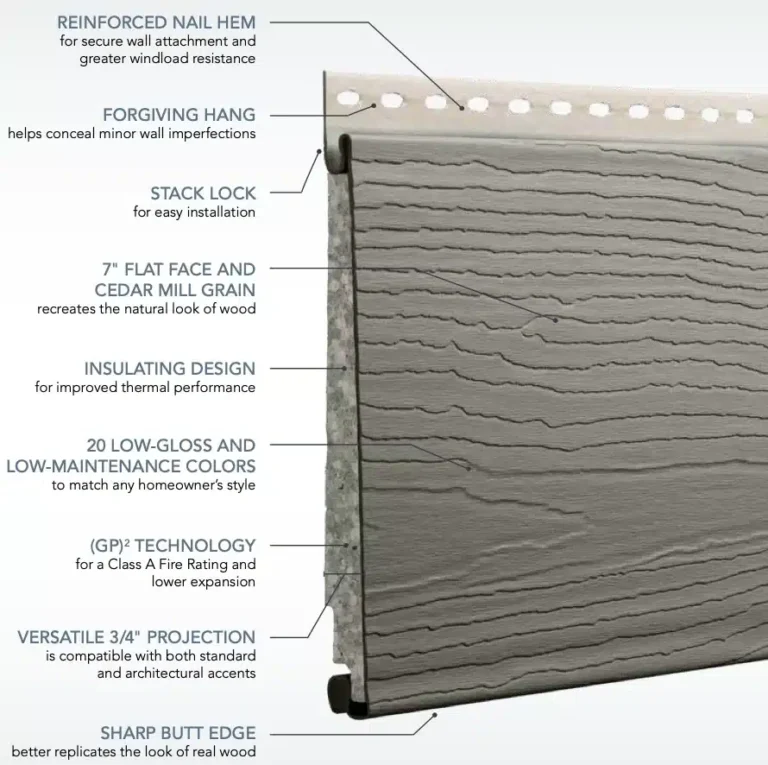
Our most-ordered vinyl profile is Gentek Signature Supreme Double 5 Dutch Lap, in the .044 panel thickness with the PowerLok and Anchor Tite locking system for wind resistance. It is backed by a lifetime limited transferable warranty with hail and fade coverage. For builders who want a composite step up from standard vinyl, Ascend composite cladding is worth a look too, with a Class A fire rating and a reinforced nail hem rated to 180 mph wind load.
If you are speccing a new build, send us the plans and we will help you land on a profile and color that fits the schedule and the budget.
Is vinyl siding good enough for new construction?
Yes. Modern vinyl like Gentek Signature Supreme is built for new construction, with a locking system rated for wind resistance and color that runs through the entire panel so it never needs painting. It is also lighter and faster to install than fiber cement, which matters on a build schedule.
How far in advance should I order siding for a new build?
As early as possible once the exterior plan is locked. Special orders batch twice a month and typically take three to four weeks once they are on a batch. The most popular vinyl colors are kept in stock, but anything outside that needs to go on the order sheet well before dry-in.
Does vinyl siding hold up in Idaho’s climate?
Yes, when it is installed correctly. The Magic Valley sees big temperature swings, strong summer UV and real freeze-thaw cycling. Gentek’s ChromaTrue technology is built to resist fade in exactly those conditions, especially on darker colors.
What is the Price difference between Hardie and Vinyl?
That depends on the area and who you have installing it. But Vinyl will always be the cheaper option. Install is easier and cheaper and there is no need to paint vinyl or do regular maintenance on it.