How to Choose Exterior Siding Colors That Actually Work: A Guide for Idaho Contractors
The color change request after material has been ordered is one of the most expensive conversations in the remodeling business. The client picked a color off a screen or a printed chart, saw it on the house and decided it wasn’t what they expected. That’s almost always a process problem, not a color problem.
Here’s how to prevent it before it starts.
Why Screen Colors Fail Every Time
Digital color rendering is inconsistent across monitors, tablets and phones. A color that looks warm on one screen reads cool on another. Manufacturer color charts are better, but printed colors shift depending on paper stock and print run. The same chart from two different years can show different hues.
More important: exterior siding doesn’t exist in a vacuum. It reads differently against different substrates, trim colors, roof tones and landscaping. A color that looks right in a brochure may look wrong on the actual house. This is a physics problem. The only reliable fix is physical samples in real light conditions.
The Physical Sample Process That Actually Works
Before any color is locked in, the client needs to see a physical sample held against the house. Not a photo of the sample. Not a rendering. The actual panel, in natural daylight, against the substrate it will sit next to.
Southern Idaho light is bright and direct. Magic Valley summers have intense UV exposure and high-angle sunlight that makes colors read lighter and warmer than they look in a showroom or on a north-facing wall. A darker color that looks rich in a catalog can look washed out by mid-morning in July.
The best contractors we work with build sample review into their standard process. They get two or three physical options, schedule a time to walk the exterior with the client and make the decision on site.
What to Do at the Approval Step
Have the client sign off on the physical sample before you order. A name, a date and a color number on the back of the sample or in a text thread is all you need. When someone tries to change the color after the order is placed, that documentation protects you and clarifies the situation for the client.
Also confirm the color against the substrate or trim material, not just in the air. Hold the sample against the existing trim or roofing material that’s staying. That’s the real comparison.
What We Have in Stock
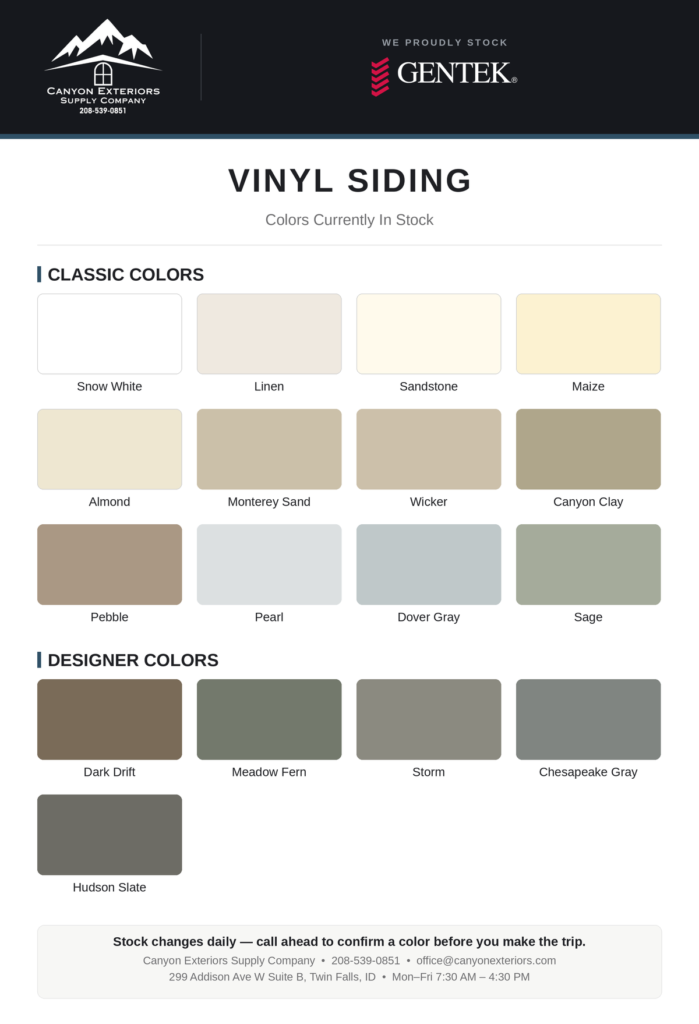
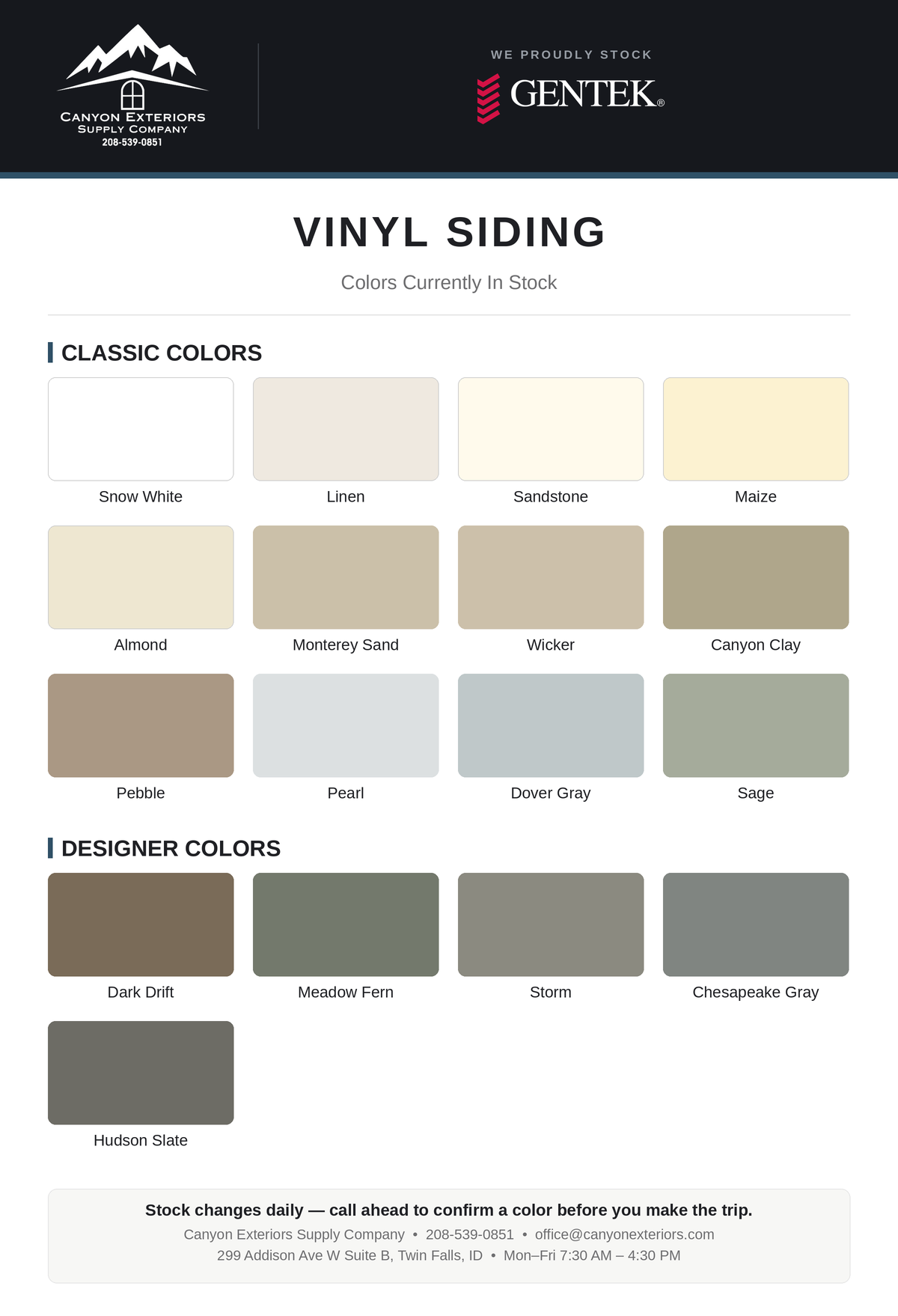
Canyon Exteriors keeps physical Gentek, Ascend, and Klauer Metal color samples in Twin Falls. If you want to pull samples for a client presentation, come in and grab what you need. We carry the current Gentek color range and we’ll tell you which colors are stock versus special order before you commit anything to the client.
For special order colors, we batch twice a month. Know what you’re ordering before the client makes a final decision so you’re not waiting on a color that came in wrong.
Frequently Asked Questions
Can I trust online color visualizers for vinyl siding selection?
Use them to narrow down to two or three finalists, not to make a final call. The rendering quality varies and doesn’t account for real light conditions, substrate color or how the color reads at full scale. Physical samples are the only reliable final step.
How do I explain color variation to a client without creating doubt?
Tell them up front that screen and print colors are approximate. Frame the physical sample review as a step that protects their investment. Clients who understand the reason for the process are less likely to push back on it.
Do you carry Gentek color samples at your Twin Falls location?
Yes. We have the current Gentek color range in the store. Call ahead to confirm a specific color is in the sample set before you come in.
What happens if a client wants to change the color after the order is placed?
Get written sign-off on the physical sample before ordering. That protects you and gives the client a clear record of what they approved. If a change happens after the order, the manufacturer’s return policy applies to stocked material. Special orders are typically non-returnable or they have a restocking fee that can be anywhere between 15%-25% of the cost of the material.