Vented vs. Non-Vented Soffit: What Every Idaho Contractor Should Know
Soffit looks like a trim decision. It’s not. The wrong soffit choice on a new build or a re-exterior affects attic ventilation, moisture levels and in some cases the roof warranty. Some soffit callbacks come from jobs where the contractor treated it as an aesthetic call and got the ventilation spec wrong.
Here’s a straight guide to when you use which.
What Soffit Actually Does
Beyond covering the underside of the roof overhang, soffit is the intake side of a passive attic ventilation system. Air enters through the soffit, moves up through the attic and exits through ridge vents or gable vents. If the soffit doesn’t allow air in, the system doesn’t work.
A sealed attic in southern Idaho means heat buildup in summer that degrades shingles faster than they should. It also means moisture accumulation in winter that leads to condensation and eventually structural problems or mold. Neither issue shows up immediately, which is why they’re easy to miss at install.
Vented Soffit: When to Use It
Use vented soffit on most residential applications. On a house with continuous soffits and a ridge vent, running vented soffit on the full perimeter is the most reliable approach.
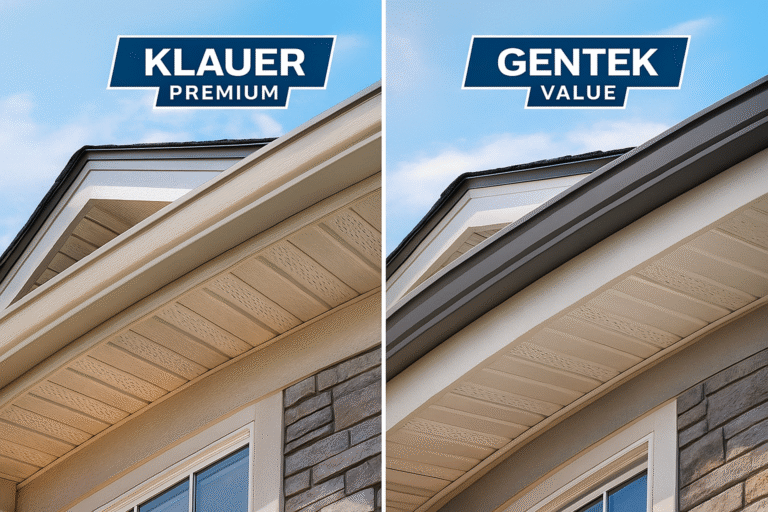
Vented soffit has a slotted or perforated face that allows airflow. It looks very similar to solid soffit from the ground and even adds a little bit of character to the trim. There’s no aesthetic penalty for going vented when vented is the right call.
Non-Vented Soffit: When It Has a Place
Solid soffit belongs in specific situations. Soffits over living space, garages or other conditioned areas don’t need attic ventilation because there’s no attic above them. Soffits on an enclosed porch or a short hip return where a run terminates are also candidates for solid panels.
The mistake contractors make is running solid soffit because they have leftover material, or because the crew grabs whichever is closest on the pallet without checking the spec. We see it come up in conversation when a roofing contractor calls out inadequate ventilation on a job that’s already finished.
Mixing Vented and Non-Vented on the Same Job
You’ll use vented soffit more than solid on on most jobs unless they have large porches. The field running along the overhang gets vented soffit. Short return runs, exterior corner returns or areas over unconditioned enclosed spaces can be either vented or solid. The key is making sure the vented area adds up to the minimum ventilation ratio for the roof system.
When in doubt, check with the roofing contractor on the job. They’re the ones who get called when attic issues develop and most of them have a preference on ventilation ratios.
What We Stock in Twin Falls
Canyon Exteriors stocks both vented and non-vented aluminum soffit at our Twin Falls location. We carry standard widths in the most common colors. If you need to confirm what we have in a specific color before you get to the job, call us and we’ll tell you what’s on the shelf.
Frequently Asked Questions
How much of a soffit needs to be vented?
The general rule is 1 square foot of net free ventilation area for every 150 square feet of attic space, split evenly between intake (soffit) and exhaust (ridge or gable). Most codes use the 150:1 ratio as a minimum. Check local code and the roofing manufacturer’s requirements before spec’ing.
What does vented soffit look like compared to solid?
Vented soffit has a slotted or perforated face. From the ground, the difference is subtle. Up close you can see the vent pattern. Both types are available in the same colors and widths.
Can you mix aluminum soffit from different manufacturers on the same job?
You can, but color matching and mismatched edges is the risk. Manufacturers have slightly different color formulas even when the name is the same. We recommend picking one line per job to avoid visible color variation.
Do you stock soffit for same-day pickup in Twin Falls?
Yes. We keep standard widths and the most common colors in stock at our warehouse on Addison Ave. Call ahead to confirm what you need is on hand before making the trip.
Ready to buy? We stock Gentek 12″ T4 aluminum soffit center-vented in 18 colors and solid in White, Black, Bronze and Musket Brown. See our aluminum soffit page for details and delivery.